

Nothing but inspiration.

This week has brought all kinds of interesting adventures. And tons of inspiration.
The location of our studio cabin, and the southern Blue Ridge Mountains, offers so much inspiration. It doesn’t come in the showy fields of flowers, kinds of ways, but rather shows up unexpectedly as flashes of color here and there.
Because the studio is in a temperate rainforest containing more than 100 species of trees, more in fact than all of Europe, the majority of our view gives us shades of green.
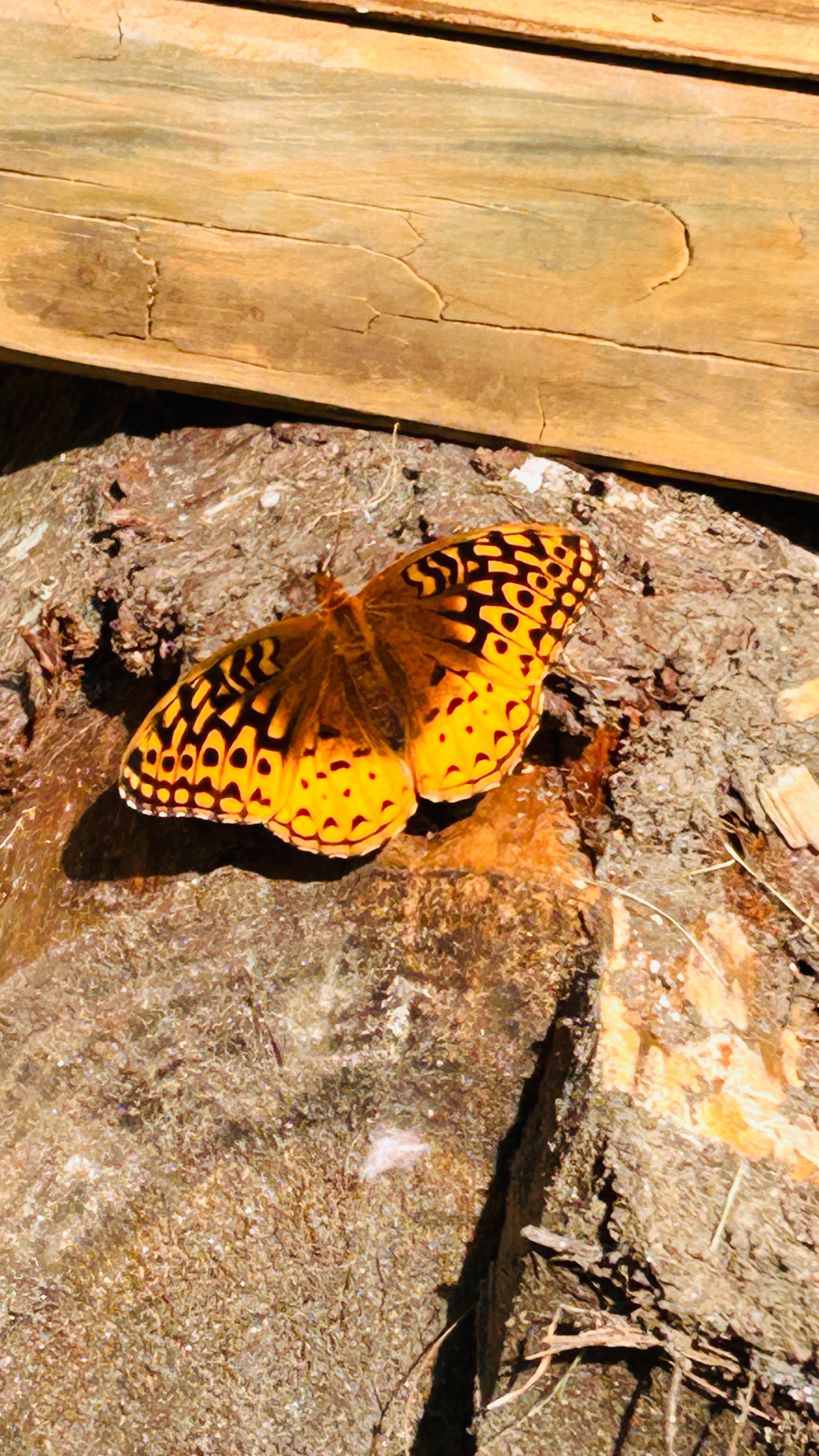
But occasionally, we get to see something like this…
Great Spangled Fritillary
Meet the Great Spangled Fritillary. As a knitter, I look at this and see intarsia, short rows, shaping, and stranded colorwork. Maybe even a hit or entrelac?
As a dyer I see incredible subtleties of golden yellows, oranges, shades of brown and black.
The science geek in me sees pollinator potential!
Spotting False Indigo
Sheri had to run into the North Carolina State Employees Credit Union recently in West Jefferson. There’s nothing that’ll cause a stir more quickly than stopping on a sidewalk in front of a bank and whipping out your phone to take up close pictures of things at the front of the bank.
Everybody in their cars sitting in the parking lot and looked at us slightly askance. And admittedly, I wasn’t even sure what Sheri had spotted until she told me that the entire front of the building is landscape with huge bushes of false indigo.
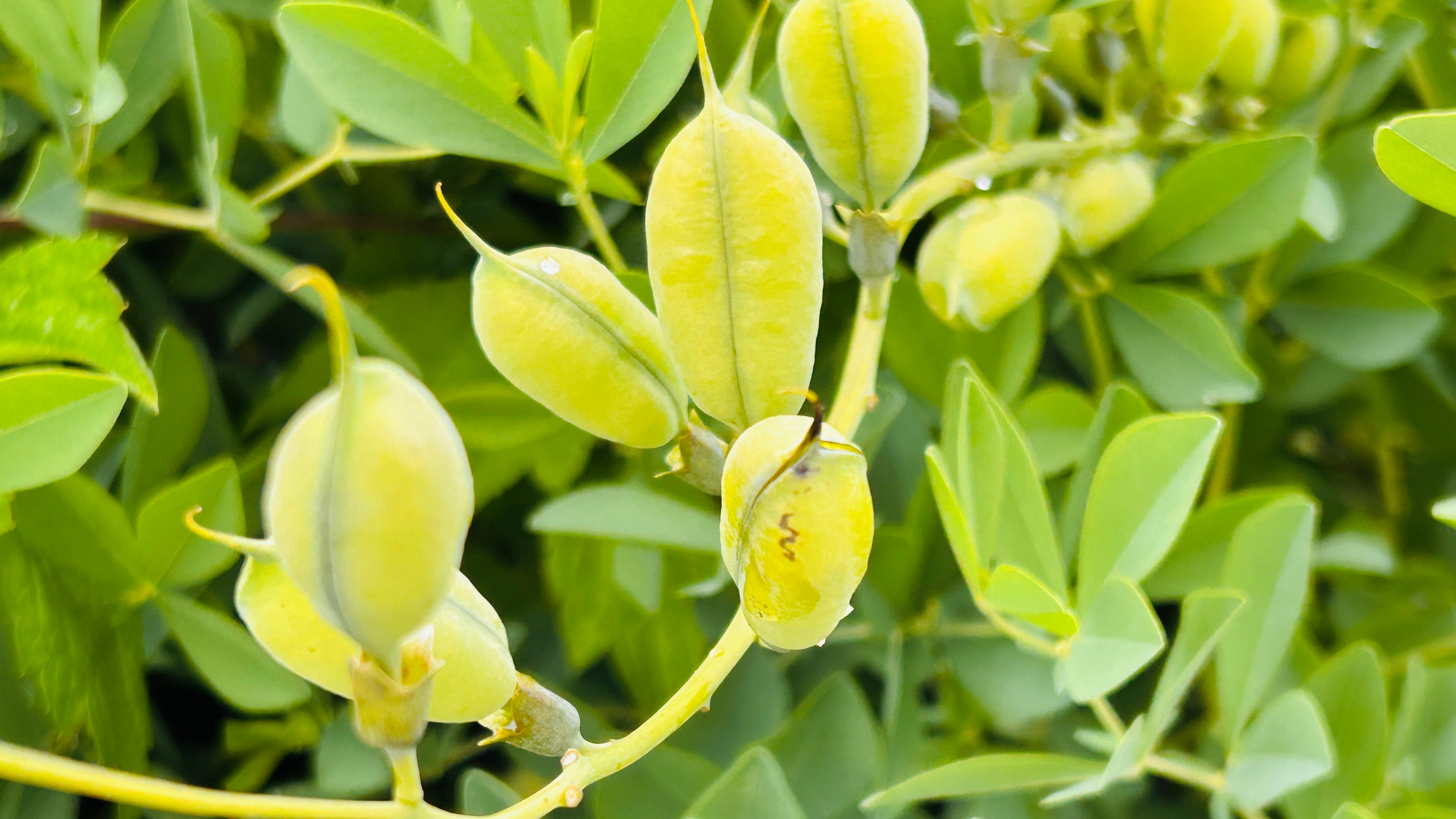

I know I shared this last week, but I wanted to touch on it again just to highlight yet again all the art materials that are hiding in plain sight. I also wanted to circle back to it because if you happen to run into this particular dye material out in the wild, and you want to grab some of the seed pods and plant them, you need to wait until they turn black. That will mean they have dried out enough to be used as seeds.
How do I know this? Because this is one of the many conversations, Sheri and I had this week in which I learned something from her and her amazing knowledge of the natural world.
Naturally Dyed Intarsia in Lace
My experiments have continued with lace and intarsia. I completed the naturally dyed swatch I was working on and blocked it aggressively. Here are the results:
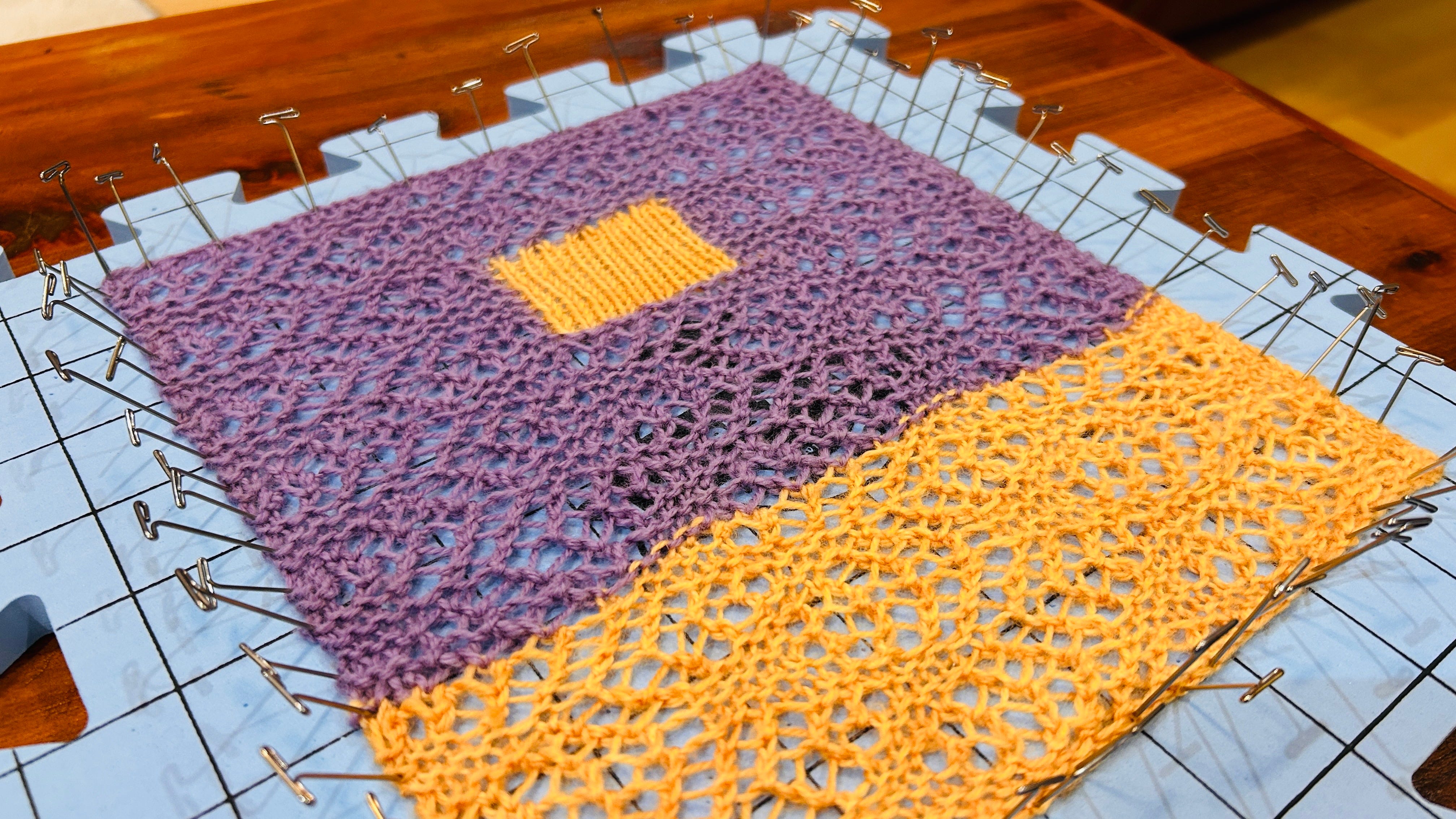
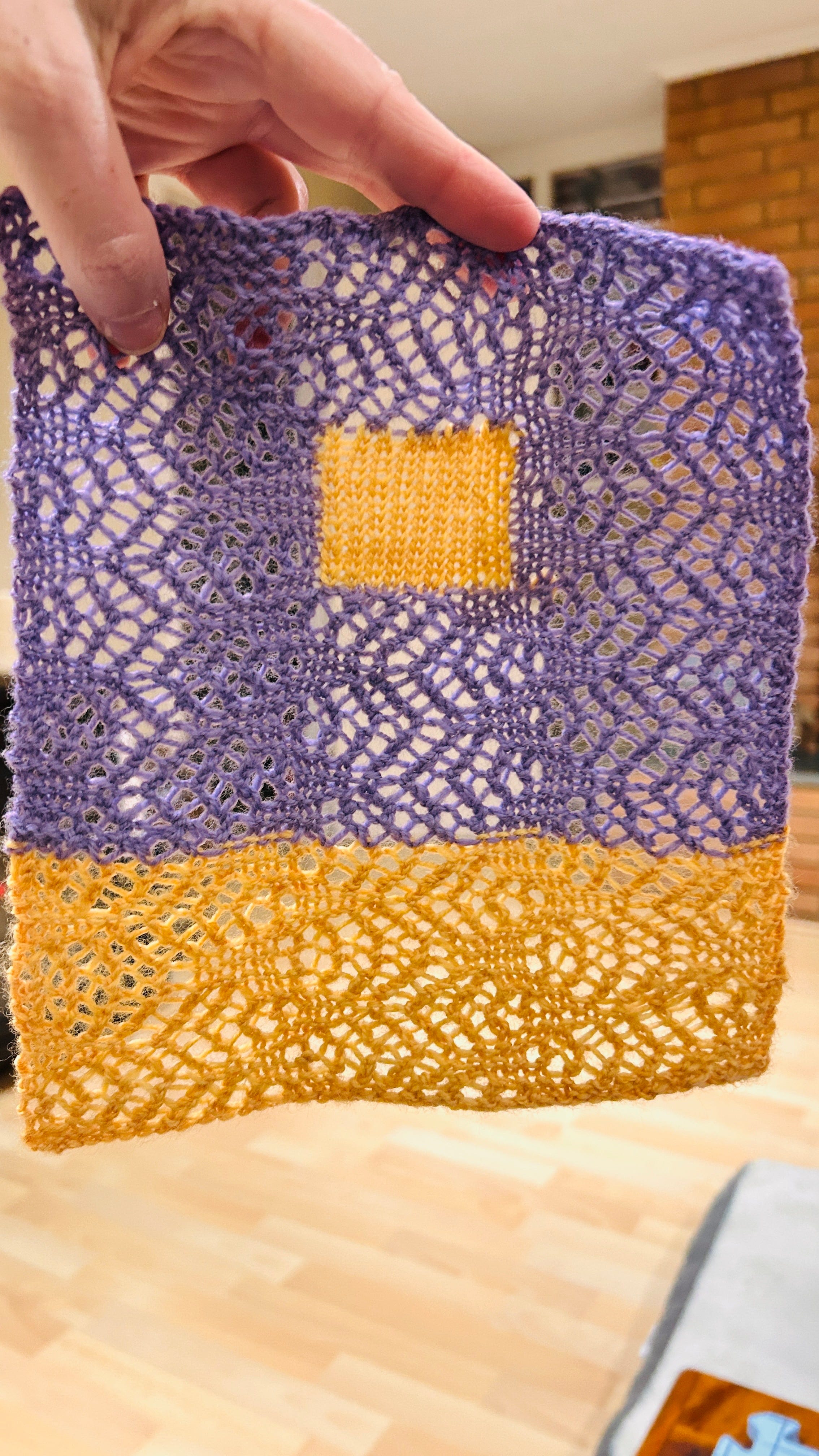
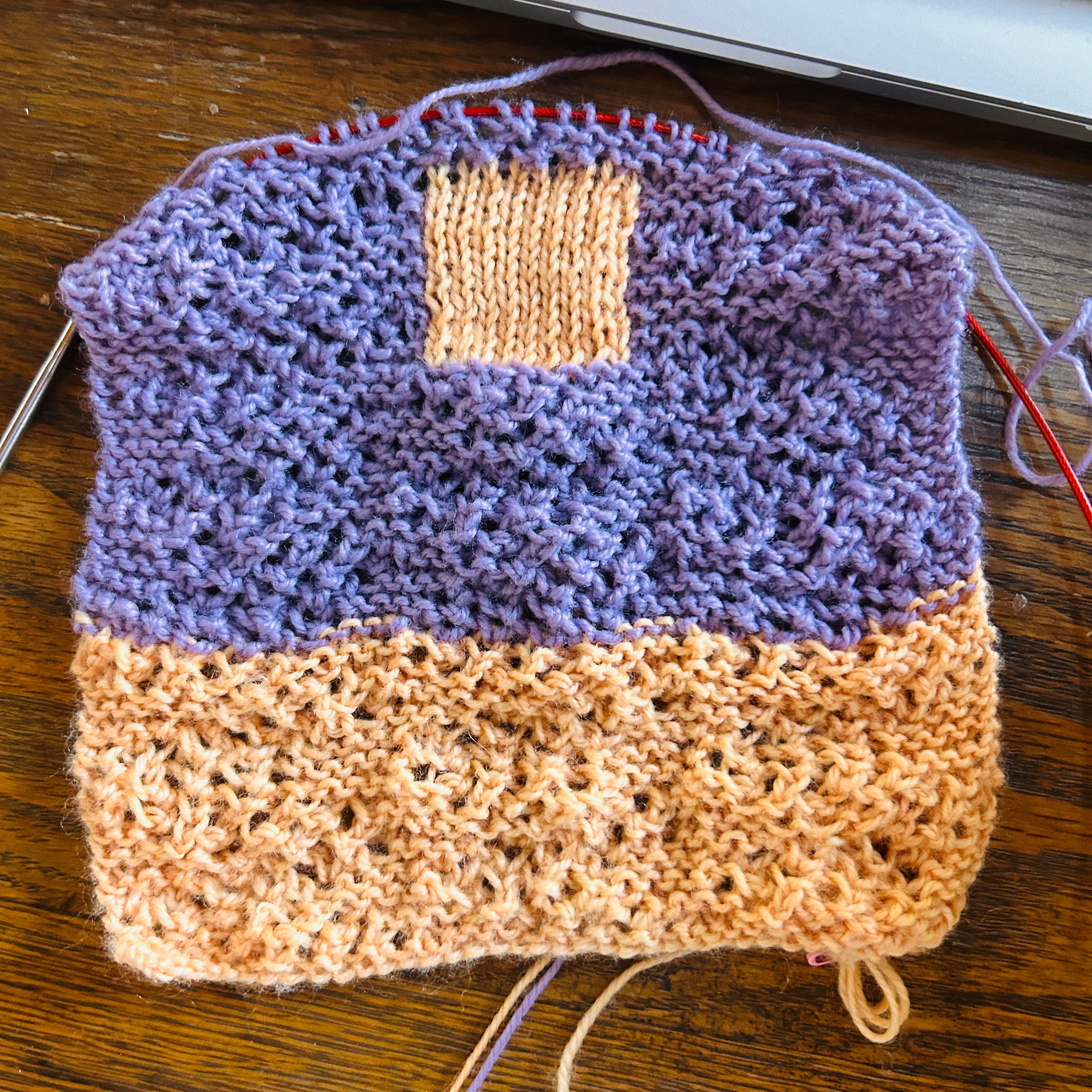
See? Blocking really is sexy…
Mary Walker Phillips
Last in my lineup with inspiring things this week is a book I’ve had for years, but really hadn’t looked at supremely closely until now.
Creative Knitting: A New Art Form, by Mary Walker Phillips is really number one on my list of inspiring things this week.
In all my years of working as an artist, I’ve never been able to fully synthesize art into my knitting practice or knitting into my art practice. I know there are tons of conversations about fine craft, and fine art, and what belongs in which category.
I don’t really care for those conversations, because I don’t think they’re solvable for reasons of personal gain, perspective, and frankly, finance. So I don’t bother to jump into those conversations for the most part.
What I’m really after is a way to finally bring all of the work I’ve done in the world of art, and all the work I’ve done in the world of craft together. As it turns out, Mary Walker Phillips may have to be my mentor from the great beyond. She was truly a pioneer, and has led me to really want to experiment with using various materials and knitting to create artwork, meant to be hung on the wall.
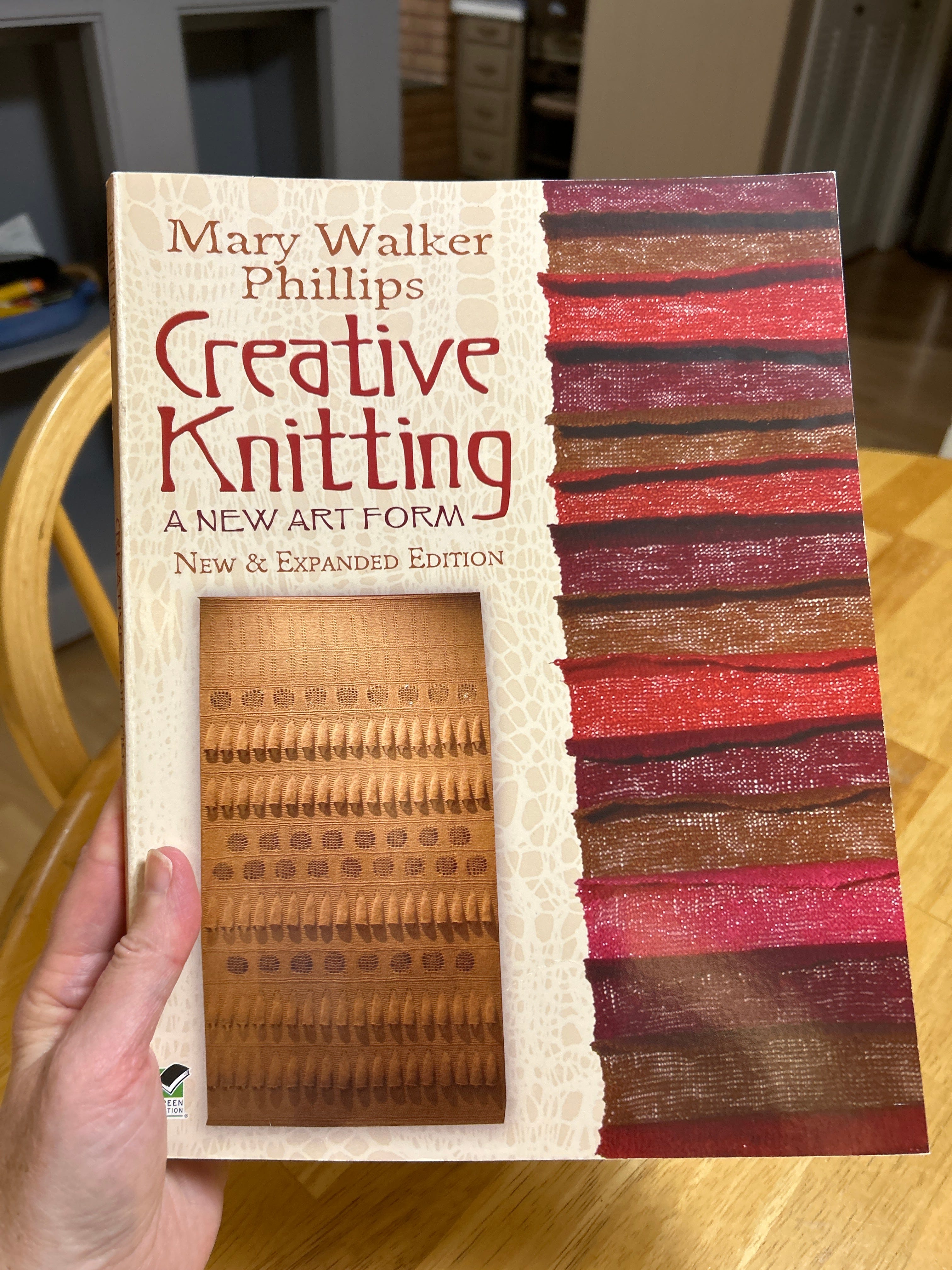
I can’t explain exactly why I feel so motivated to do this. Maybe it goes back to American anthropologist and writer Ellen Dissanayake’s idea that art is the act of “making special.”
Not that knitting needs my help in that…
Xoxo
Ladianne
My first thought when I saw that lace/intarsia piece was "that should be mounted and hung on the wall." Then I saw that you were reading Mary Walker Phillips.
You're already doing it, my friend!